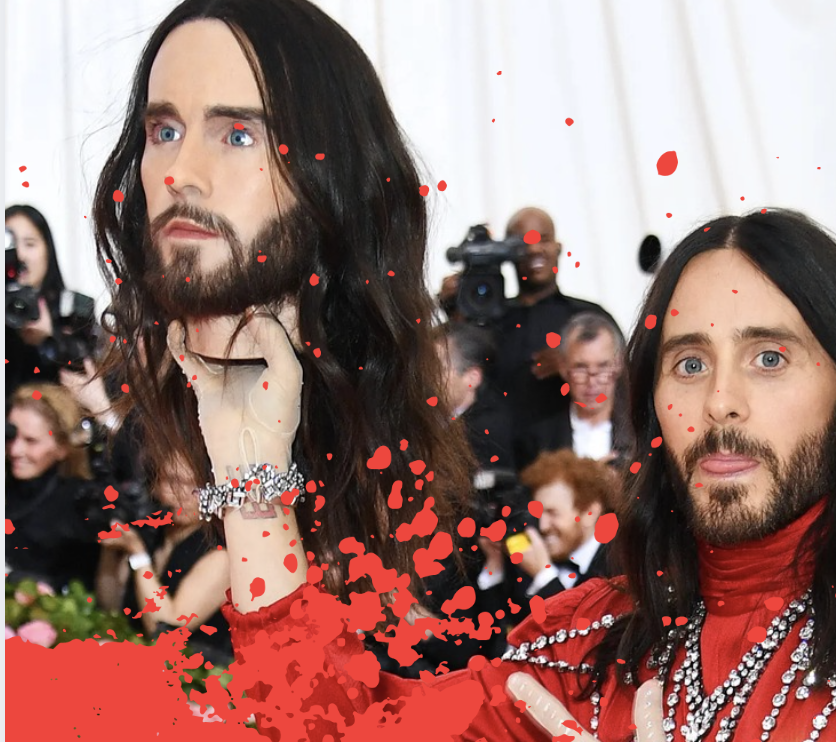
Jared Leto: Demanding the messiah, delivering the predator.
The industry is a factory of manufactured amnesia. The BBC’s latest foray into the Jared Leto controversy isn't a revelation; it is a late invoice for a debt the public has been trying to collect for twenty years. To frame this as a bombshell in 2026 is a performative act of institutional silence, a calculated attempt by the mainstream media to reclaim its status as a moral gatekeeper while ignoring its long term complicity in the myth of the untouchable artist1,3. We are being sold a narrative of discovery to hide a history of collaboration.
Old Rot and Digital Burial
This isn't new information; it is old rot. Anyone who was on LiveJournal back in the day was aware of the rumours about Leto, the underage girls, and the stories of coercive, rough sex that were spat into the margins as a warning to the next target while the music press was busy printing hagiographies. We must hold the UK music press of the 2000s to account. Outlets like NME and Kerrang! did not just report on the indie sleaze era; they were its primary architects and protectors. They traded access for silence, burying the open secret in exchange for cover stories and backstage passes. This is the parasitic loop of the music industry: the press needs the star to sell copies, and the star needs the press to sanitise their behaviour. The bombshell is a betrayal of the journalists who actually did the work in the margins while the editors were busy polishing the idols in newsrooms that stank of stale beer and complicity2.
The Blueprint of Immunity: Beyond the Stones
This blueprint for immunity was drafted in the 1960s and 70s. We have watched the Rolling Stones navigate decades of documented predation with 0% impact on their legacy. Bill Wyman’s pursuit of Mandy Smith when she was thirteen was not a whisper; it was a matter of public record that the band and the industry absorbed as part of the rock god brand. The Stones survived the MeToo movement with relatively no comments, no reckonings, and no loss of status. They remain the untouchable sovereign asset. This immunity extends to figures like Anthony Kiedis, who admitted to a sexual relationship with a fourteen year old in his own book, Scar Tissue9. When the artist provides the evidence themselves and still faces no professional consequences, we are witnessing the absolute power of the Auteur Myth. Kiedis and the Stones are not anomalies; they are the standard by which industry immunity is measured.
The Joker Shoot and the Legal Fortress
The industry has allowed the Method to become a shorthand for excusing cruelty. We saw this peak during the Suicide Squad shoot, where Jared Leto famously sent used condoms, anal beads, and live rats to his cast members under the guise of getting into character as the Joker. This wasn't an artistic process; it was a power trip that the media at the time celebrated as commitment. The cast were bound by the professional omerta of a $175 million budget; to speak out was to sabotage the asset. They were stakeholders in a corporate machine that views biohazardous harassment as "eccentricity" and dissent as a breach of contract. But while the cast are silenced by the bottom line, the actual victims of sexual abuse face a more formidable barrier: the loan-out company. Most stars of Leto’s stature operate through these shell corporations, creating a legal nesting doll that insulates the individual from direct liability. When a survivor tries to sue for abuse at a show or a retreat, they don't hit the star; they hit a corporate entity designed to absorb the shock of litigation and disappear into the paperwork. This is the ultimate industry enclosure: the privatisation of the individual into a corporate fortress that is legally distinct from the artist but physically identical to the predator4.
The Mars Island Enterprise and the Othering of the Fan
This reaches its logical conclusion in the neocolonialism of Mars Island. Far from a mere fan retreat, Mars Island is a calculated commercial enterprise owned and operated by Jared Leto. These private ventures represent the physical privatisation of sovereign land for the profit of a Western elite7. On the Croatian coast, where the local economy often fractures under the weight of seasonal tourism and low wage labour, Leto occupies the landscape with a $6,000 a head "retreat." The physical contrast is visceral: white robed "pilgrims" performing spiritual enlightenment on private docks, while just beyond the gates, the local population facilitates the infrastructure of a messiah they could never afford to meet. The industry Others the fanbase to justify this exploitation. By framing Leto’s followers as eccentric, alternative, or part of a cult, the media removes them from the protection of standard social contracts. If these victims were seen as ordinary workers, the outrage would be immediate. Instead, their perceived Otherness is used to frame the abuse as a choice or a subcultural quirk. The fan is digital sharecropping; they provide the emotional labour that fuels the messiah brand while paying for the privilege of their own extraction6.
The Statute of Profitability and Forensic Erasure
We must recognise that in the entertainment industry, there is no statute of limitations on harm, only a Statute of Profitability. The media apparatus does not wait for evidence to emerge; it waits for the asset to depreciate. The bombshell exposé is timed to coincide with the moment the celebrity’s future earnings can no longer cover the cost of their legal and PR protection. This is a cold, calculated business move. The BBC and the music press are not uncovering the truth; they are merely liquidating a toxic asset that has reached its expiration date. This is further protected by the Indie Sleaze aesthetic as a form of forensic erasure. By celebrating the grainy, raw photography and the chaotic authenticity of the 2000s, the industry is effectively blurring the evidence of the era’s predation. The aesthetic becomes a tool to sanitise history; we are taught to see the vibe rather than the victim. The grainy film is the smokescreen that prevents us from seeing the bodies in the corner of the room.
The Messiah to Martyr Trajectory
When the ethereal glow of pretty privilege is threatened by the cold light of a courtroom, the predator simply swaps the white robes for a suit of persecution. We see it in the Russell Brand playbook: when the allegations become mainstream, the predator pivots to traditionalism, courting a reactionary audience that views accountability as a hit piece5. This is the Messiah to Martyr trajectory. The messiah aesthetic, the white robes and the ethereal glow, is the first step toward the political martyr role. The beauty buys the initial benefit of the doubt; the martyrdom buys the defence. By joining the anti-woke movement, the celebrity moves into a world where allegations are rebranded as badges of honour for fighting the establishment. This is the ultimate grift: using the genuine anger of a disillusioned public to protect the status of a predator who has spent decades exploiting the very people he now claims to represent.
The Maggot in the Wound
The media is the maggot in the wound. The Documentary Industrial Complex is a parasite that thrives on the decay of the truth. They profit from the silence for two decades, and then they profit from the revelation. Your shock is part of the business model. By the time the documentary airs, the industry has already extracted 100% of the profit from the perpetrator and is now looking for a final round of revenue from the fallout8.
The media is not a watchdog: it is a vulture circling the site of a disaster it helped engineer. By the time the BBC or the music press decides to intervene, the trauma has already been strip-mined for its last drop of cultural capital. We at TheZineUK are not exempt from this critique. To exist within the orbit of the entertainment industry is to be complicit in the very structures of idolatry and enclosure we seek to dismantle. We are part of the machine that polishes the idols before it breaks them; our only defence is a commitment to lessening the harm by refusing the manufactured shock of the bombshell and documenting the rot while it is still wet. For Leto, the trajectory is predictable. As the secular world of the liberal elite finally closes its doors, we should expect a pivot toward the reactionary right. The messiah aesthetic is perfectly calibrated for the MAGA stage, where accountability is rebranded as persecution and cruelty is sold as a strike against the establishment5. The open secret only ends when we stop treating celebrity as a licence for cruelty. Until then, the machine will keep turning, the islands will stay occupied, and the next bombshell is already being scheduled for the next time your attention starts to wander.
[1] Adorno, T. W., & Horkheimer, M. (1944). The Culture Industry: Enlightenment as Mass Deception. (Analysis of structural amnesia in mass media).
[2] Zerubavel, E. (2006). The Elephant in the Room: Silence and Denial in Everyday Life. Oxford University Press.
[3] The Savile Precedent. Report into the BBC's internal culture of silence. (2016).
[4] Power-Distance Index (PDI) in Creative Industries. Sociological review of labour law suspension in high-hierarchy sets.
[5] The Brand Pivot. Analysis of reactionary traditionalism as a shield. New Statesman (2023).
[6] Federici, S. (2004). Caliban and the Witch. (On the extraction of unpaid emotional labour and the muse as commodity).
[7] Sassen, S. (2014). Expulsions. (On the creation of territorial holes and sovereign celebrity immunity).
[8] Fisher, M. (2009). Capitalist Realism. (On how the media absorbs its own critique through the Documentary Industrial Complex).
[9] Kiedis, A., & Sloman, L. (2004). Scar Tissue. Hyperion.