Pop's Iron Cage: Taylor Swift and the Systemic Failure of Modern Music
The modern music industry, a labyrinthine construct of corporate power and algorithmic dominance, stands as a stark testament to how late capitalism distorts and ultimately devours authentic artistic expression. Within this manufactured landscape, the independent artist, particularly those from working-class backgrounds, striving for genuine creation and profound connection, finds their voice consistently muted, their efforts sidelined. Their struggle for radio play, for visibility on streaming platforms, for access to venues, and for a slice of the ever-dwindling revenue pie, is not merely a matter of talent or luck; it is a systemic issue rooted in the pervasive logic of profit, a logic that finds its most potent, and arguably most damaging, embodiment in phenomena like Taylor Swift.
While countless bands and solo artists labour in relative obscurity, crafting music that challenges, inspires, or simply resonates with a deeper, unvarnished truth, the airwaves remain saturated by a select, commercially vetted few. For working-class bands, often without inherited wealth or industry connections, the journey from bedroom to gig, let alone to radio, is fraught with insurmountable financial and logistical barriers. Rehearsal spaces, recording costs, equipment maintenance, tour expenses, these are not trivial outlays, and without the backing of a major label or substantial personal funds, many genuinely innovative acts simply cannot sustain themselves. These are the bands that we at TheZineUK champion, the voices from communities often overlooked by the mainstream, whose raw energy and authentic narratives offer a vital counter-current to the polished spectacle. The mechanisms of commercial radio, driven by advertising revenue and demographic targeting, relentlessly prioritise proven formulas over artistic innovation. This creates an insidious echo chamber, where access and exposure are contingent upon alignment with a market-tested aesthetic, effectively marginalising voices that dare to deviate from the commercially viable norm. These independent acts, often self-funded, their tours a gruelling succession of cramped vans and meagre payouts, represent a vital counter-current to the spectacle, yet their very existence is threatened by its overwhelming, homogenising force. Their art is a labour of love, not a calculated product, a stark contrast to the industry's dominant paradigm.
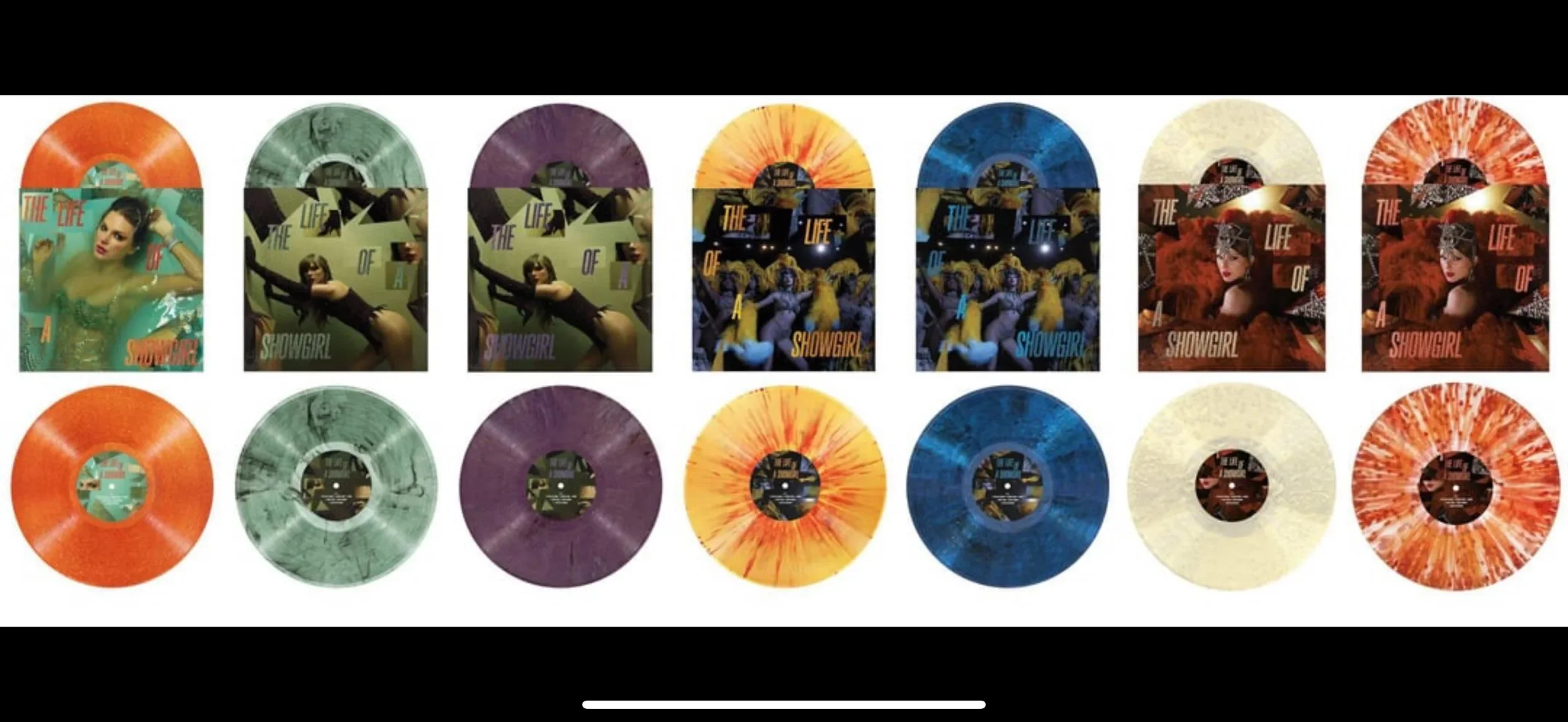
Taylor Swift’s unprecedented commercial success, while lauded by many as a triumph of modern pop, simultaneously lays bare the profound distortions inherent in this capitalist-driven music ecosystem. Her strategic deployment of multiple album variants (differing vinyl colours, exclusive digital tracks, limited-edition merchandise bundles, each with a slightly altered cover or bonus content) is not merely a marketing tactic; it is a sophisticated, almost cynical, exercise in chart manipulation. Each distinct purchase, regardless of the minimal variation in content, registers as a separate unit sale, artificially inflating her chart positions and cementing an illusion of overwhelming public demand. This practice speaks directly to Guy Debord’s foundational concept of the spectacle, where the commodity detaches so entirely from its original use-value that it becomes its own image, a pure sign that mediates all social relations. Here, the album is less an auditory journey and more an icon, a symbol to be acquired and displayed. The music itself recedes behind the act of consumption (the frenzied acquisition of a collectable variant, the competitive participation in a fan-driven campaign to secure a chart position), transforming the cultural product into a pure commodity-sign. Its perceived value is derived less from its inherent artistic merit and more from its function within a larger, self-referential cycle of accumulation and spectacular validation. Debord posited that in such a society, direct experience is superseded by its representation; thus, the joy of music is replaced by the joy of possessing its latest iteration, or contributing to its quantifiable 'success' within the spectacle. This phenomenon is not unique to Swift; we see similar, albeit perhaps less aggressive, tactics employed by other pop titans like Beyoncé with her elaborate visual albums and exclusive box sets, or the constant re-packaging and re-release strategies common across the industry. This process effectively hollows out the art, replacing genuine, critical engagement with a performative act of purchasing, where loyalty to the brand supersedes appreciation of the craft. For emerging artists, particularly those without the capital to replicate such tactics, this relentless chart manipulation creates an almost insurmountable barrier. It doesn't just skew the metrics of success; it actively blocks their path, ensuring that the airwaves remain closed to original, uncommodified voices and that truly diverse artistic expression struggles to gain traction.

The consequences for the music industry are dire, revealing the profound emptiness of art pursued solely for profit. Swift's music, despite its undeniable commercial appeal and meticulous production, frequently exhibits a pervasive artistic mediocrity. Lyrically, it often operates within predictable emotional registers, recycling familiar narratives of youthful heartbreak, romantic betrayal, or celebrity feuds with little genuine insight, linguistic innovation, or original perspective. Consider the repetitive thematic arcs across her discography (the wronged woman, the vengeful ex, the misunderstood billionaire), all re-packaged with minor variations. Musically, it rarely ventures beyond established pop conventions, relying on formulaic chord progressions and song structures that prioritise immediate catchiness and broad appeal over sonic exploration or challenging arrangements. This is no coincidence; when art is primarily conceived as a product to be maximised for profit within a capitalist framework, the imperative for genuine innovation and challenging artistic statements often diminishes. The market rewards broad appeal and repetitive consumption, not necessarily depth, originality, or artistic risk-taking. This philosophical shift, where art's purpose transmutes from expression, connection, or cultural commentary into mere capital accumulation, effectively takes the heart from art. It strips away its intrinsic value (and its’s capacity to move, to provoke, to reflect humanity in all its complexity), reducing it simply to a disposable commodity. For working-class artists, whose art often stems from deep-seated needs for voice, community, and resistance, this commodification feels like a betrayal of art's very essence. The result is a cultural landscape increasingly dominated by products that are safe, palatable, and easily digestible, rather than thought-provoking, transformative, or truly boundary-pushing, thereby pushing truly original art and emerging talents further to the margins of public consciousness.
Beyond the artistic critique, a growing, palpable disconnect exists between Swift’s carefully constructed narrative and the realities faced by the vast majority of her audience. Swift's narrative often casts her as a champion of artist rights, notably when she re-recorded her early albums to reclaim ownership of her masters. This move, widely celebrated as a victory for artists' autonomy, cemented her image as a powerful, independent woman fighting corporate control. However, this carefully cultivated image of a feminist icon, battling for artistic freedom, exists in jarring contradiction to the very system she so effectively dominates. While she battled for her own masters, the broader capitalist music industry, which she profits from immensely, continued to exploit countless women, particularly those from working-class backgrounds, whose labour is cheap and whose artistic output is easily commodified. Her monumental success, built on tactics that stifle emerging talent, indirectly contributes to the blocking of countless working-class female artists who lack the financial and structural support to navigate an industry increasingly hostile to uncommodified voices. The narrative of individual triumph, while inspiring to some, obscures the systemic barriers that prevent genuine parity and diversity, especially for women without Swift's extraordinary privilege and resources. No one expects Taylor Swift to deliver a political manifesto or a protest album, nor is that the core of her artistic identity. However, for a billionaire, whose personal wealth is astronomical, to continuously churn out self-obsessed lyrics about her own struggles (struggles that, however real to her, are framed in a distinctly glamorous, hyper-privileged context) has become extremely tedious and seems profoundly detached. In an era marked by escalating cost-of-living crises, geopolitical instability, and widespread economic precarity, the relentless focus on her celebrity romances, feuds, and personal triumphs feels increasingly tone-deaf. Even more glaringly, her extensive private jet usage, contributing significantly to carbon emissions, and her conspicuous silence on geopolitical issues that no one, regardless of how far removed from everyday people, can truly ignore, further underscore this profound disconnect. Her art, rather than offering a mirror or a window to the broader human experience, becomes a gilded cage of self-absorption, failing to acknowledge, let alone engage with, the pressing world events and everyday hardships that define the lives of millions. This detachment, from such a position of immense privilege, highlights the corrosive effect of extreme wealth on artistic perspective.
Furthermore, Swift’s carefully curated persona and narrative often feel like a continuously recycled performance (the "life of a showgirl" where the same themes, the same emotional beats, the same "eras" are re-packaged and re-presented with minor cosmetic changes). This endless re-treading of familiar ground, this strategic invocation of nostalgia for recent pasts, devoid of significant artistic evolution or engagement with external realities, underscores the capitalist imperative to extract maximum value from a proven brand, rather than to foster genuine creative growth. It’s a spectacle of self-repetition, where the artist becomes a living, breathing advertisement for their own past successes, their identity and history continuously re-edited and re-sold, further solidifying the commodification of their very being. Debord warned that in the realm of the spectacle, genuine individual identity dissolves into a series of roles and representations. The artist, in this context, is no longer an autonomous creator but a mediated image, a recurring character in their own carefully managed drama. The constant re-invention is, paradoxically, a form of stasis, an aesthetic treadmill designed to keep the revenue streams flowing.
This capitalist critique extends far beyond Swift herself to the fundamental, systemic issues she so effectively navigates. The immense resources dedicated to sustaining her commercial juggernaut (from elaborate marketing campaigns to exclusive distribution deals, from carefully managed public relations to the weaponisation of fan loyalty) represent capital diverted away from fostering diverse talent. It entrenches an economic model where a few mega-stars, operating as corporate brands, monopolise attention, airwaves, and revenue, leaving independent artists, working-class bands, and niche genres starved of investment, exposure, and the vital oxygen of cultural relevance. This creates a deeply imbalanced ecosystem, where the vast majority of artists struggle for scraps while the established few accumulate unprecedented wealth and influence. The art, stripped of its intrinsic value and reduced to a mere vehicle for profit, becomes an empty vessel, reflecting the broader cultural impoverishment that occurs when market forces dictate artistic production, leading to a profound alienation of both the artist from their authentic work and the audience from a truly rich and diverse cultural experience.
Ultimately, Taylor Swift's unparalleled commercial dominance, facilitated by calculated chart manipulation and a pervasive, meticulously managed media presence, stands as a powerful and troubling case study in the capitalist corrosion of the music industry. Her strategies, with their undeniable Debordian echoes, starkly reveal how the spectacle transforms art into a commodified image, detached from its authentic use-value and artistic integrity. This prioritisation of profit over creative depth ultimately fosters pervasive artistic mediocrity, stifles genuine diversity, and perpetuates a system where the vibrant, challenging voices of the underground (particularly those from working-class communities) struggle desperately to be heard. They are subsumed by the overwhelming, manufactured noise of the capitalist spectacle, the endless, glittering re-runs of the showgirl’s meticulously choreographed life, and the profound detachment of a billionaire narrative from the urgent struggles of the real world, leaving us with an industry that often feels more like a factory than a forge of human expression, its very heart is sacrificed on the altar of profit.