Art from the Margins: A Manifesto for Creative Resistance
The stage is not neutral. The gallery wall is not innocent.
For too long, we've been told that "art" lives in clean white rooms, that "culture" is what gets archived in institutions built on stolen land with stolen wealth. But those of us creating from the margins know different. We know that the most vital, most dangerous, most necessary art has always come from those the state would rather silence or disappear.
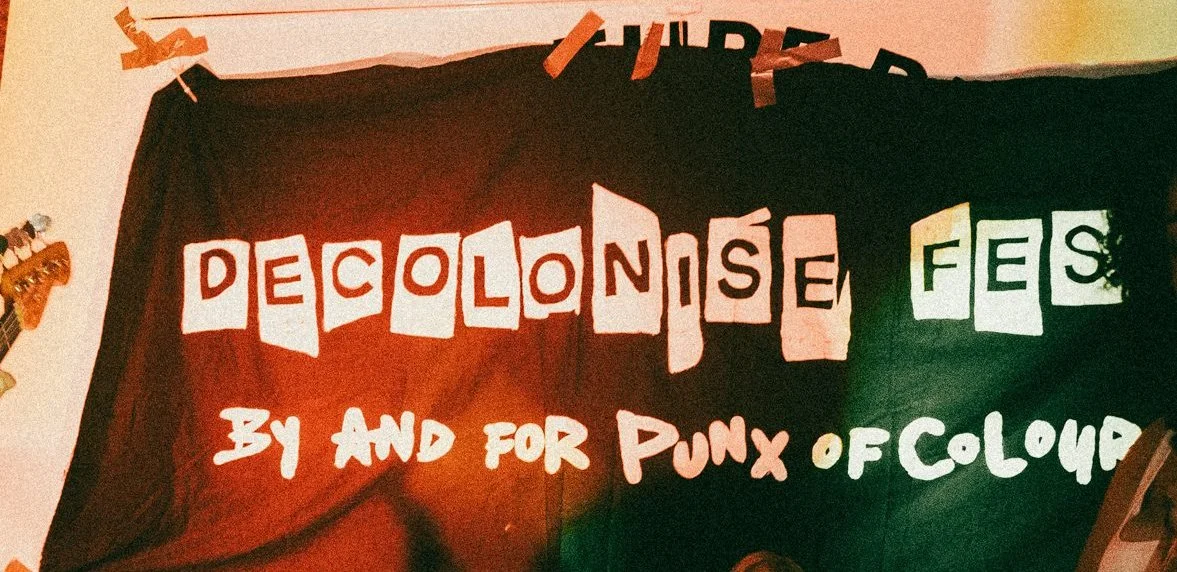
Festivals like Decolonise Fest—a grassroots cultural festival platforming Black, migrant, and Indigenous artists—understand this. The festival champions the creative visions of those systematically excluded. Artists whose work doesn't just represent resistance—it is resistance. This isn't diversity window-dressing. This is a reclamation of narrative power, a dismantling of who gets to speak, who gets heard, and whose stories are deemed worthy of amplification.
And it's happening now, whilst the rest of the music industry seems content to fiddle whilst Britain burns.
I'm Not Asking Every Band to Be The Clash
If you're a musician reading this, let me say something clearly, right at the start, because it matters: I'm not demanding that every singer-songwriter abandon their heartbreak ballads for agitprop anthems.
We need the love songs. We need the grief songs. We need the songs about loneliness and longing and the ache of 3 am when you can't sleep. We need familiarity. We need the comfort of a chorus we can sing in the dark when everything feels impossible. Music heals us, holds us, reminds us that we're human.
I need those songs too. I listen to them when I'm exhausted from organising, when I've spent another day trying to educate people about the Porajmos (the Romani Holocaust), whilst the far-right gains ground. I need the tenderness. I need the beauty.
But here's what bewilders me…What keeps me awake at night:
Where are the protest songs?
Not where's the revolution. Just: where are the songs about what's happening?
In a Britain where refugees drown in the Channel, whilst the government criminalises those who'd save them, where Grenfell burned, and no one has been held accountable, where the Police, Crime, Sentencing and Courts Act makes protest itself illegal…
We've got a hundred songs (rightly) about mental health, but none naming austerity as the architect of despair. A thousand breakup songs, but none about communities being broken apart by hostile environment vans.
I'm not saying art must be didactic. I'm not demanding every song be a ten-point programme set to music. But when fascism is rising, when it's here, when asylum hotels are being burned, when people are drowning in waters we could cross to save them, but our government has made it criminal to try.
Silence isn't neutrality. Silence is a choice.
And right now, that choice is deafening.
Our Lineage (Or: We Come from Fighters)
For anyone who thinks political music is dead or that it never mattered. This country has one of the richest histories of musical resistance in the world. We come from a tradition of picking up instruments like weapons and fighting back.
From the early folk singers, Ewan MacColl and Peggy Seeger singing "The Moving-On Song" about Traveller evictions, making the political deeply personal to the explosion of punk in the late '70s. Everyone knows The Clash screamed "White Riot" and "Know Your Rights" whilst the National Front marched through Lewisham.
But we've canonised the safe examples and ignored the ones still threatening power. The ones who name Israel as an apartheid state. The ones who call for abolition, not reform. The ones the BBC won't touch. The ones who make the establishment genuinely uncomfortable rather than nostalgically rebellious.
Asian Dub Foundation's "Fortress Europe." Lowkey's surgical dissection of imperialism and British complicity in genocide. Billy Bragg's "Between the Wars." The Specials' "Ghost Town" soundtracking Thatcher's Britain burning. These are our lineage too.
And now?
Now we have Kneecap, three lads from Belfast rapping in Irish, taking the British government to court for cultural discrimination and winning, proving that music can still be a genuine threat to power.
I was part of the stewarding organised by the London Irish Brigade. I attended all three court cases for Mo Chara, helping get them to and from court safely. What I saw there, the crowds who showed up, the music that brought us together, the collective refusal to let the state win, reminded me why it matters.
On the last day, Frank of the London Irish Brigade jokingly claimed the hill outside the court. He stuck a tricolour flag in it, calling it Kneecap Hill, a symbolic reclaiming of British land for the Irish still under occupation in the North. It was absurd. It was necessary. It was what you do when the state tries to erase your language, your culture, your right to exist loudly.
Now, we have musicians like Craic Killers, a new activist band carrying that torch forward, proving that the tradition isn't dead, it's just been pushed to the margins. We have Speit, a Palestinian/Irish rapper and spoken word performer, fusing experiences of occupation into something that makes solidarity audible. Others keep that flame alive.
But they're exceptions. They're anomalies in a landscape dominated by artists who seem content to soundtrack capitalism's collapse with vague melancholy and apolitical introspection.
And I don't understand it. I genuinely don't. Because the material is right there. The stories are right there. The rage and grief and love and resistance, it's all right there, waiting to be sung.
What Music Does (And Why I'm Writing This)
Here's what Kneecap understand, what The Clash understood, what every great protest musician has understood: music unifies. It creates the collective feeling that isolated resistance can't.
When you're in a crowd singing "London Calling" or "C.E.A.R.T.A." or Bob Marley's "Get Up Stand Up," you're not alone anymore. You're part of something bigger than your individual fear or rage. You're part of a movement.
Music brought us to those court solidarity actions. Music kept us there. Music reminded us why it mattered.
And this is what things like Decolonise Fest offer: that same sense of collective power but centred on voices usually excluded from those spaces. When Roma musicians perform our traditional songs, songs that survived the Porajmos, that survived centuries of persecution, we're not just entertaining. We're demonstrating that we're still here. That you tried to kill us and we're still singing.
When Palestinian artists create under siege and genocide, they're proving that the occupier can destroy homes but not culture. When Irish-language rappers spit bars in a language the British state tried to erase, they're reclaiming what was stolen.
This is music as resistance. This is music as survival. This is music as the thing that keeps us human when the system wants us dead or silent or compliant.
Why Your Silence Matters (And Why I'm Terrified Too)
To every musician, songwriter, artist reading this:
I know the music industry is brutal. I know labels drop artists for speaking about Palestine. I know the radio blacklists songs that name politicians. I know the algorithm punishes controversy. I know that speaking out can cost you your career and your livelihood.
I know you're frightened. I am too.
I'm frightened every time I post about Roma resistance, knowing the far right is watching. I'm frightened when I organise events around Roma Genocide Remembrance Day, knowing we're making ourselves visible to people who want us dead. I'm frightened when I write about Palestine, knowing it has already cost me opportunities, platforms, and safety.
But I'm more frightened of what happens if we all stay silent.
I'm more frightened of a generation of young people who are angry and lost and don't know what to do with it. Who need songs that tell them they're not alone. Who need songs that help them understand why everything feels so broken Who need songs that remind them resistance is possible.
And if you're an artist with a platform, with even a modest following, a local fanbase, a few hundred people who listen when you speak, you have power. Not unlimited power. Not power without risk. But power, nonetheless.
So, here's what I'm asking, and I'm asking it with all the tenderness I can muster:
What are you willing to risk to tell the truth?
You might lose radio play. You might lose the festival slot. You might lose followers, opportunities, the comfortable path. But you'll gain something too: the knowledge that when it mattered, you didn't stay silent. That when people were drowning, you sang about it. That when fascism rose, you stood against it.
You don't have to write "Killing in the Name." You don't have to be Lowkey.
You can write about your nan being denied her pension because of Windrush. You can write about your mate who can't afford insulin. You can write about the kid in your town who drowned trying to cross the Channel. You can write about the Traveller families evicted from the same site every six months. You can write about Grenfell—about how the cladding was cheaper than lives, about how five years later no one's been jailed.
You can write about your own fear, your own rage, your own grief at what this country is becoming.
You can name the systems. You can name the policies. You can name the politicians. You can make people feel the connection between their personal pain and the political forces causing it.
Maybe you don't know where to start. That's alright. Start by listening. Start by learning. Start by amplifying those who do know. Follow @romarisingagainstfascism. Listen to Speit and Craic Killers. Learn about the Porajmos. Understand what's happening in Palestine. Then, when you're ready, add your voice.
Let's be terrified together and do it anyway.
What You Can Actually Do (Starting Today)
This isn't abstract. Here's what supporting art from the margins and creating political art yourself looks like in practice. Pick one thing from this list and do it this week. Then pick another next week. Build the habit of solidarity.
For Music Fans & Audiences:
1. Buy a ticket to Decolonise Fest and similar grassroots events.
Find information and dates through their social media and grassroots networks. These festivals survive on ticket sales and word-of-mouth. If you can't afford a ticket, volunteer. If you can't attend, donate. Just engage.
2. Follow @romarisingagainstfascism today.
Learn about Roma history and resistance. Follow Na Cairde Collective, Speit, and Craic Killers. Share their music, not just once, but regularly. When they announce a gig, share it. When they release new work, amplify it.
3. Email your local venue this week.
Use this template if it helps:
"Hi, I'm a regular at your venue, and I've noticed your lineups tend to feature predominantly white, male artists. I'd love to see more diversity - specifically Roma, Traveller, Palestinian, and other marginalised artists. Here are some suggestions: [list 2-3 artists]. Would you consider booking them? I'd definitely attend and bring friends."
4. Buy music directly from artists, not just streams.
Bandcamp Friday exists for a reason. Buy the album. Buy the merch. Contribute to crowdfunders when artists need studio time or tour support.
5. Educate yourself about one struggle this month.
Start with the Porajmos. Read one article about Traveller evictions under the Police Bill. Learn about Palestinian resistance and British complicity. Just one thing. Then another next month.
6. Show up to one solidarity action.
Follow organisations like the London Irish Brigade, local Palestine solidarity groups, and migrant rights networks. When they call for support, a court case, a protest, a vigil — show up.
For Artists & Musicians:
1. Write one political song this month.
It doesn't have to be perfect. Just write about something real: Grenfell, the Channel drownings, your community being priced out, the Traveller site that keeps getting evicted, the rising price of Freddos... Tell the truth. Trust your audience.
2. Dedicate one social media post per week to political education.
Share a fundraiser for marginalised artists. Amplify a call to action. Post about Congo, about Windrush, about Palestine.
3. Reach out to one marginalised artist for collaboration.
DM a refugee musician. A Palestinian poet. A Traveller storyteller. Offer your studio time. Suggest splitting a bill. Build relationships, not just one-off gestures.
4. Make your next gig pay-what-you-can.
Try it once. See what happens. Make your art accessible to people who can't afford £15 tickets.
5. Challenge one industry practice.
If you're asked to play a festival with an all-white lineup, ask them to book a Roma artist too. If your label won't let you speak about Palestine, ask why. Use whatever leverage you have.
6. Perform at one grassroots event for free.
A benefit gig for refugees. A fundraiser for Traveller families facing eviction. A solidarity event for Palestine.
For Venue Owners & Promoters:
1. Book one marginalised artist as headliner this month.
Not as support. As the main event. Pay them what you'd pay a white artist with similar experience or better.
2. Contact Roma Rising or similar organisations this week.
Email them. Ask how you can support. Offer them a night to programme. Give them the space, the resources, the promotion.
3. Put anti-fascist policies on your door today.
Make it visible: "Nazis not welcome. Racists will be removed. This is a safe space for marginalised communities." Train your staff. Mean it.
4. Create one sliding-scale event per month.
£3-£10 suggested donation. No one turned away for lack of funds.
For Writers & Media:
1. Pitch one story about marginalised artists this week.
Interview them about their politics, their analysis, their art, not their trauma. Let them speak as experts, not victims.
2. Quote marginalised voices directly in your work.
Don't paraphrase through a liberal filter. Trust them to speak for themselves.
3. Investigate one industry failure.
Why are festival lineups so white? Which labels platform fascists? Name names.
An Invitation (Not a Demand)
I'm not here to shame you. I'm genuinely not. We're all doing what we can with what we've got, and none of us are perfect. I fuck up regularly. I'm learning as I go. So are you.
But I am here to say: we need you.
We need musicians willing to write the songs that name what's happening. We need fans willing to demand better from the industry. We need venues willing to take risks. We need writers willing to platform marginalised voices. We need all of us to recognise that the cultural landscape is a battleground—and right now, we're losing ground.
Decolonised Fest is happening. Roma Rising is happening. Artists like Speit and Craic Killers are creating vital, urgent, beautiful work in the face of state violence and industry indifference. The resistance isn't theoretical. It's already here.
The question isn't whether resistance is possible.
The question is: are you going to be part of it?
You don't have to be perfect. You don't have to have all the answers. You just have to show up.
Pick one thing from the list above. Do it this week. Then pick another.
Start small if you need to. But start today.
Because the margins are rising. We're building something powerful here, something that centres the voices this country has spent centuries trying to erase. Something that proves art can still be dangerous, still be transformative, still be a genuine threat to power.
There's a place for you here.
See you at Decolonise Fest. Or at the next court solidarity action. Or in the DMs when you reach out to collaborate. Or on the picket line. Or at the benefit gig. Or at the Roma Genocide Remembrance Day event.
Or wherever you choose to show up.